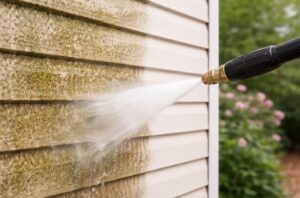
You notice green buildup on your siding, stains across the driveway, or grime covering the patio—but temperatures are already dropping.
Can you still pressure wash?
Sometimes, but cold-weather exterior cleaning requires more consideration than simply connecting a pressure washer and getting started.
Temperature, freezing conditions, the surface being cleaned, water runoff, drying time, and the cleaning method all matter. There is a significant difference between cleaning on a mild fall afternoon and attempting to pressure wash when surfaces or runoff can freeze.
At Cleantech, we approach pressure washing according to the surface and current conditions rather than treating every exterior cleaning job the same way.
Here’s what homeowners should understand before pressure washing in colder weather.
Can You Pressure Wash When It’s Cold Outside?
Cool weather by itself doesn’t necessarily mean exterior cleaning is impossible.
The more important question is whether conditions allow the surface to be cleaned and dry appropriately without creating freezing-related problems.
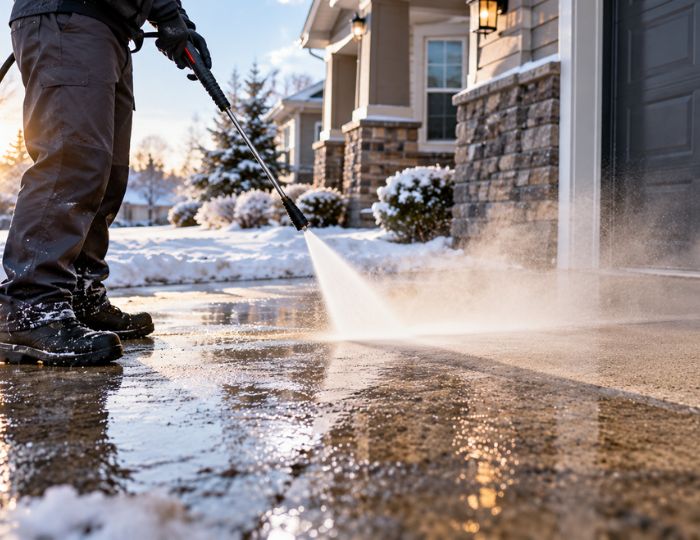
As temperatures get colder, water can take longer to evaporate. If temperatures approach or fall below freezing, water left on surfaces can freeze.
That can create problems on walkways, steps, driveways, decks, and other areas where ice may become a concern.
It can also affect equipment, hoses, and the cleaning process itself.
Rather than using a single temperature rule for every property, the entire set of conditions should be evaluated.
Why Freezing Temperatures Change Everything
Pressure washing uses water—and freezing temperatures fundamentally change how that water behaves.
Water that collects on a driveway, sidewalk, patio, or other surface may freeze rather than dry.
That is particularly concerning in areas where people walk.
Runoff can also travel away from the exact surface being cleaned. Water may move toward steps, sidewalks, shaded areas, or other places where freezing creates an issue.
For this reason, professional exterior cleaning involves more than evaluating whether a machine can physically operate in cold weather.
The conditions after cleaning matter too.
Homeowners should consider temperature trends, shade, sunlight, drainage, and how quickly temperatures are expected to fall after the work is completed.
Different Surfaces Require Different Cleaning Methods
Another reason to be cautious about cold-weather pressure washing is that not every exterior surface should be cleaned the same way in the first place.
Concrete, siding, wood, pavers, roofing, and painted surfaces have different characteristics.
Cleantech’s guide to what surfaces can be safely power washed explains why identifying the material is an essential first step.
Siding May Require a Gentler Approach
House siding is a perfect example.
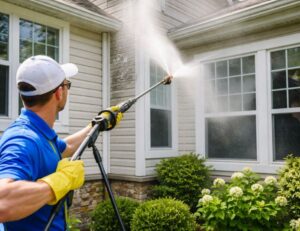
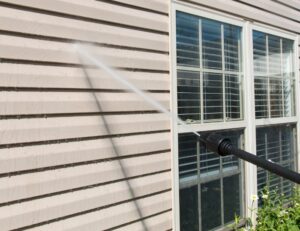
Homeowners sometimes assume that visible grime means they need maximum pressure. In reality, professional house washing should use a method appropriate for the siding and the type of buildup being removed.
Our guide to soft washing vs. pressure washing explains why these cleaning methods shouldn’t be treated as interchangeable.
The objective is to clean the surface effectively without applying unnecessary force.
Cold Weather Can Affect Drying Time
Drying is an overlooked part of exterior cleaning.
Warm temperatures, sunlight, airflow, shade, humidity, and the material itself can all influence how quickly a surface dries.
During colder weather, moisture may remain longer on surfaces.
This is particularly relevant late in the day. A surface cleaned during the afternoon may still be wet as evening temperatures begin dropping.
That’s one reason timing matters.
When exterior cleaning is appropriate during cooler weather, scheduling it during favorable conditions can give surfaces more time to dry before temperatures fall.
Be Especially Careful With Driveways and Walkways
Driveways and sidewalks deserve special consideration because they’re frequently used by people and vehicles.
Water remaining on these surfaces during freezing conditions can create ice.
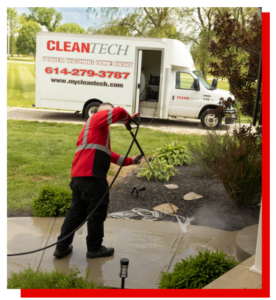
Professional driveway cleaning can remove accumulated grime from concrete, but weather conditions should be appropriate for the work.
The same applies to sidewalk washing.
Homeowners should think beyond whether the surface needs cleaning and consider what will happen to the water during and after the job.
If conditions aren’t appropriate, waiting can be the smarter choice.
What About Decks and Patios?
Decks and patios can also accumulate dirt, stains, algae, and other buildup heading into winter.
However, these surfaces bring their own considerations.
Wood can be damaged by improper pressure-washing technique. Pavers and other patio materials also need to be cleaned according to their specific characteristics.
Cleantech provides professional fence and deck cleaning as well as patio and paver washing.
If you’re planning to clean a deck yourself, our article on how to power wash a deck provides additional information about the process.
In colder weather, surface type and weather conditions should both factor into the decision.
When Should You Wait for Better Weather?
There are times when exterior cleaning simply shouldn’t be forced into the schedule.
If water is likely to freeze quickly, if the surface can’t dry adequately, or if runoff could create unsafe icy areas, waiting for more favorable conditions can make sense.
That doesn’t necessarily mean waiting until spring.
Weather can fluctuate considerably, and a suitable cleaning window may become available during a warmer period.
The key is not treating the calendar as the only deciding factor.
Conditions matter.
If you’re unsure how often your property needs professional cleaning in the first place, Cleantech’s home exterior maintenance guide can help you plan cleaning around the needs of your home.
Professional Cleaning Takes the Guesswork Out of the Process
DIY pressure washing can look straightforward, but homeowners have to make several decisions before cleaning begins.
How much pressure should be used? Is pressure washing appropriate for the surface? What cleaning method should be used? Where will runoff go? Will the surface dry? Are current weather conditions suitable?
Those questions become even more important as temperatures drop.
Professional cleaners can evaluate the surface and conditions before deciding how the job should be approached.
Cleantech offers a range of residential exterior cleaning services for homeowners who want professional help maintaining their property.
We also serve communities throughout our service areas.
If you’re wondering whether the current weather is suitable for your exterior cleaning project, request a quote from Cleantech and tell us what you need cleaned.
Key Takeaways
- Cool weather doesn’t automatically rule out exterior cleaning, but conditions need to be appropriate.
- Freezing temperatures can turn cleaning water and runoff into ice.
- Surface temperature, drainage, sunlight, shade, and drying time should all be considered.
- Different materials require different cleaning methods.
- Siding may benefit from a gentler cleaning approach rather than maximum pressure.
- Driveways and sidewalks require particular caution when freezing conditions are possible.
- Decks, fences, and patios should be cleaned according to their materials and condition.
- Sometimes waiting for a better weather window is the appropriate choice.
- Professional cleaning can help homeowners avoid guessing about pressure, technique, and weather conditions.